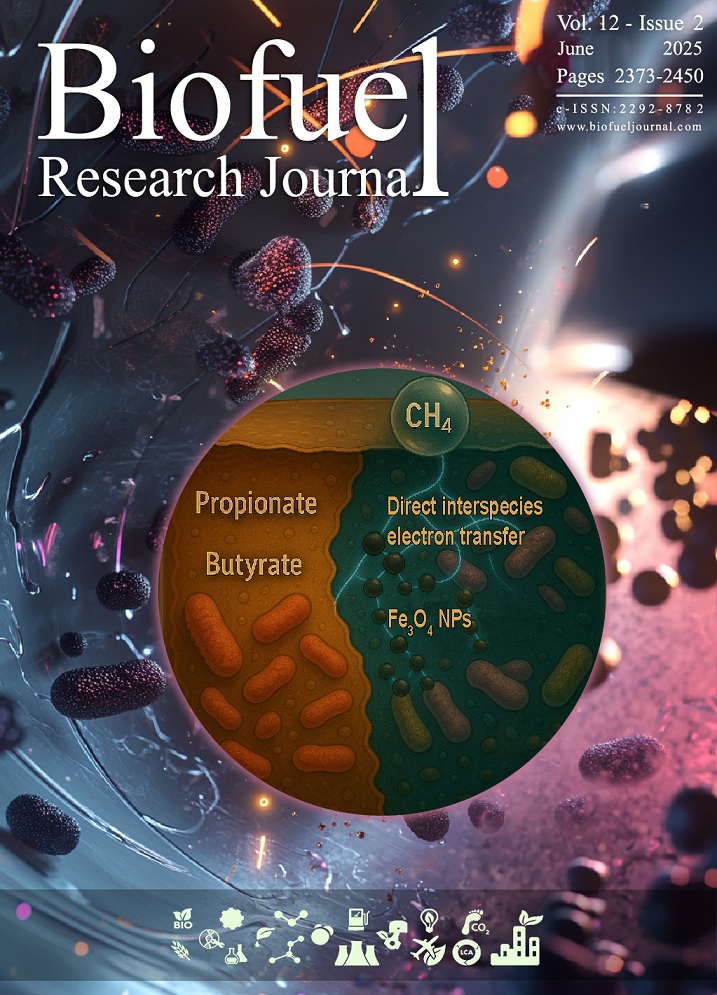
Anaerobic digestion (AD) is a key waste-to-energy technology that transforms organic waste into biogas, contributing to renewable energy generation and environmental protection. However, AD systems are vulnerable to the accumulation of volatile fatty acids (VFAs), which disrupt methanogenesis and reduce system stability. Using batch tests to determine methanation kinetics, followed by long-term semi-continuous operations with stepwise butyrate and propionate additions, this study assessed both short- and long-term impacts of nano magnetite (magnetic nanoparticles, MNPs; specifically Fe₃O₄ nanoparticles) supplementation. Results demonstrated that MNPs facilitated VFA degradation within the VFA-stressed systems by promoting direct interspecies electron transfer (DIET), reducing oxidative stress, and enhancing enzymatic activity. The supplementation of MNPs improved methane production under VFA-induced stress, increasing yields by up to 7.9% and 8.7% in butyrate- and propionate-stressed systems, respectively. Moreover, MNP additions shortened the lag phases of butyrate and propionate methanation by over 24% while stabilised microbial viability above 85% compared to 70.7% in untreated systems during long-term operations. Smaller MNPs (20 nm) improved solid reduction rates by 4.01–6.82% within the stressed systems, reducing slurry disposal costs. Economic and environmental analysis demonstrated potential electricity revenue increases of 8.78–12.79%, while environmental assessments showed reduced carbon emissions. These findings suggest that MNPs provide a scalable and effective solution for industrial AD plants, particularly those treating cellulose-rich waste and substrates leading to rapid VFA production (e.g., food waste). Importantly, this study bridges lab-scale experimentation with practical applications, using batch-derived thresholds to inform semi-continuous operations. Future research should focus on long-term environmental impacts and MNP recovery strategies to ensure sustainable deployment.
Graphical Abstract
Highlights
Nano magnetite increased methane yield by up to 8.7% under fatty acid stress.
Direct interspecies electron transfer improved enzymatic and microbial resilience.
Pretreatment with nano magnetite stabilised microbial diversity and methanogens.
Economic analysis showed 8.8–12.8% more revenue and reduced carbon emissions in response to nano magnetite addition.
Nano magnetite improved solid reduction and reduced disposal costs.
Zhu,X. , Blanco,E. , Bhatti,M. and Borrion,A. (2025). Promoting methanogenesis and stability in anaerobic digestion with nano magnetite under VFA-induced stress. Biofuel Research Journal, 12(2), 2432-2450. doi: 10.18331/BRJ2025.12.2.5
MLA
Zhu,X. , , Blanco,E. , , Bhatti,M. , and Borrion,A. . "Promoting methanogenesis and stability in anaerobic digestion with nano magnetite under VFA-induced stress", Biofuel Research Journal, 12, 2, 2025, 2432-2450. doi: 10.18331/BRJ2025.12.2.5
HARVARD
Zhu X., Blanco E., Bhatti M., Borrion A. (2025). 'Promoting methanogenesis and stability in anaerobic digestion with nano magnetite under VFA-induced stress', Biofuel Research Journal, 12(2), pp. 2432-2450. doi: 10.18331/BRJ2025.12.2.5
CHICAGO
X. Zhu, E. Blanco, M. Bhatti and A. Borrion, "Promoting methanogenesis and stability in anaerobic digestion with nano magnetite under VFA-induced stress," Biofuel Research Journal, 12 2 (2025): 2432-2450, doi: 10.18331/BRJ2025.12.2.5
VANCOUVER
Zhu X., Blanco E., Bhatti M., Borrion A. Promoting methanogenesis and stability in anaerobic digestion with nano magnetite under VFA-induced stress. BRJ, 2025; 12(2): 2432-2450. doi: 10.18331/BRJ2025.12.2.5