On the Cover
Efficient ethanol fermentation is vital to sustainable biofuel production, but contamination by lactic acid bacteria remains a major challenge. This issue's featured study, conducted by a team of researchers from the U.S. Department of Agriculture and the Oak Ridge Institute for Science and Education (USA), introduces an innovative solution: engineered Saccharomyces cerevisiae that secretes bacteriophage endolysin LysKB317 to mitigate bacterial contamination in corn mash fermentation (DOI: 10.18331/BRJ2024.11.4.4). The yeast secretes the endolysin continuously, achieving significant reductions in acetic and lactic acids while improving ethanol yields by up to 16%. This strategy eliminates the need for antibiotics and energy-intensive sterilization, offering a sustainable approach to bioethanol production. The findings highlight a scalable and eco-friendly method to address bacterial contamination, advancing the biofuel industry's move toward greener energy solutions. Cover art by BiofuelResJ. ©2024.
Pages 2211-2224
Marios Psarianos, Roland Schneider, Önder Altuntas, George Dimopoulos, Petros Taoukis, Oliver K. Schlüter

Pages 2225-2242
Manasseh K. Sikazwe, Jeanne Louw, Johann F. Görgens

Pages 2243-2255
Shao-Yeh Lu, Maulik H. Patel, Ronald E. Hector, Michael J. Bowman, Christopher D. Skory

Pages 2256-2282
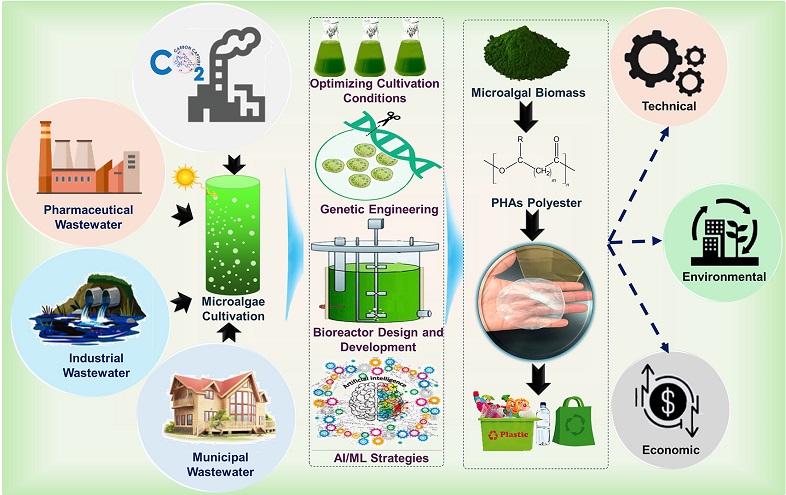
Rijuta Ganesh Saratale, Si-Kyung Cho, Ram Naresh Bharagava, Anil Kumar Patel, Vivekanand Vivekanand, Shashi Kant Bhatia, Luiz Fernando Romanholo Ferreira, Han Seung Shin, Mukesh Kumar Awasthi, Sankha Chakrabortty, Ramesh Kumar, Ganesh Dattatraya Saratale